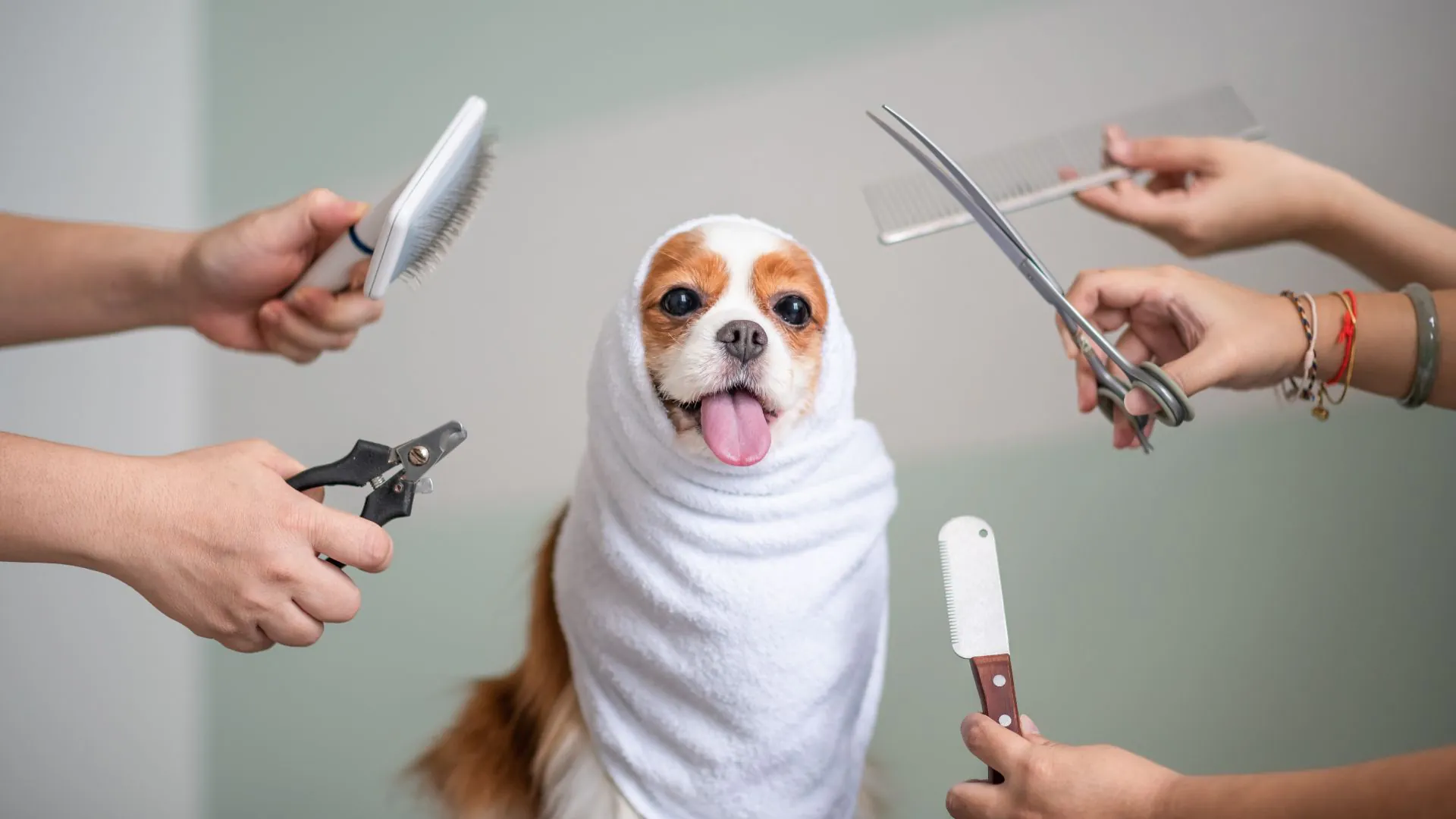


For many pet owners, nothing triggers a mutual wave of anxiety quite like hearing the telltale click-click-click of overgrown dog nails on the hardwood floor. Maintaining proper nail length is a vital pillar of your dog’s structural health and physical comfort. Yet, the mere sight of a pair of nail clippers can turn a peaceful evening into a high-stakes wrestling match.
If your pup spends their days hiking the rocky terrain of local Austin trails, the granite and limestone can naturally help grind down their claws. However, residential walks and indoor living mean most dogs still require regular maintenance. Learning how to trim dog nails at home without stress requires the right tools, a basic understanding of canine anatomy, and a heavy dose of patience.
As your local experts in dog walking and behavior-driven dog training, Walk! ATX has designed this step-by-step guide to help you master home paw-pedicures without the drama.
Why Routine Nail Trims Are Crucial
Overgrown nails are more than an aesthetic issue or a hazard to your leather couch; they actively alter your dog’s posture and biomechanics.
When a dog’s nails are too long, they hit the ground with every step, pushing the nail back up into the toe joint. To compensate for this discomfort, your dog is forced to shift their weight backward, altering the natural alignment of their paws, legs, and spine. Over time, this unnatural posture puts excessive strain on their joints, accelerating the onset of arthritis—especially in senior dogs.
Furthermore, neglected nails are highly prone to splitting, tearing, or curling completely around into the delicate pad of the paw, which can cause a painful infection that requires veterinary intervention.
Understanding the Anatomy: The Quick
The single biggest barrier to a successful home nail trim is the fear of “quicking” the dog. Inside every canine nail runs a central core called the quick. The quick houses a live blood vessel and a highly sensitive nerve bundle.
- On White or Clear Nails: The quick is easily visible as a distinct pink shadow running through the center of the nail. You can safely trim up to a few millimeters before the pink zone.
- On Black or Dark Nails: The quick is completely hidden from the outside. To safely trim dark nails, you must shave off incredibly thin slices—one tiny layer at a time. As you cut closer to the quick, look directly at the cut edge of the nail. When you see a small, dark gray or black circle appear in the dead center of the white chalky interior, stop immediately. That dark circle is the protective inner wall housing the tip of the quick.
Your Safety Net: Styptic Powder
Before you ever touch a pair of clippers to a paw, ensure you have a jar of styptic powder (like Kwik Stop) or a clean small bowl of cornstarch sitting right next to you. If you accidentally nick the quick, don’t panic. The nail will bleed heavily because of the localized blood vessel. Simply press a pinch of the powder directly onto the tip of the nail and hold firm pressure for 30 seconds to stop the bleeding instantly.
Choosing Your Tools
Using the right equipment can completely transform the experience for your dog. Ditch dull, outdated clippers that crush the nail wall, and choose one of these modern options:
1. Plier-Style Clippers
Featuring a built-in spring mechanism and a heavy-duty blade, plier clippers offer the most mechanical leverage and a clean, swift cut. They are highly recommended for large breeds with thick, dense nails.
2. Guillotine-Style Clippers
These clippers feature a small internal loop where the dog’s nail is inserted. Squeezing the handle drops a single blade across the opening. While excellent for small to medium dogs, the blades dull quickly and must be replaced regularly to prevent splitting the nail tissue.
3. Rotary Nail Grinders (Dremels)
Grinders use a high-speed sanding drum to slowly file the nail down layer by layer.
- The Pros: They completely eliminate the risk of a sudden, deep “quicked” cut, leave the edges incredibly smooth, and are fantastic for dark nails.
- The Cons: The vibration and buzzing sound can be highly intimidating to noise-sensitive pets, requiring a gradual desensitization process.
Step-by-Step Home Trimming Guide
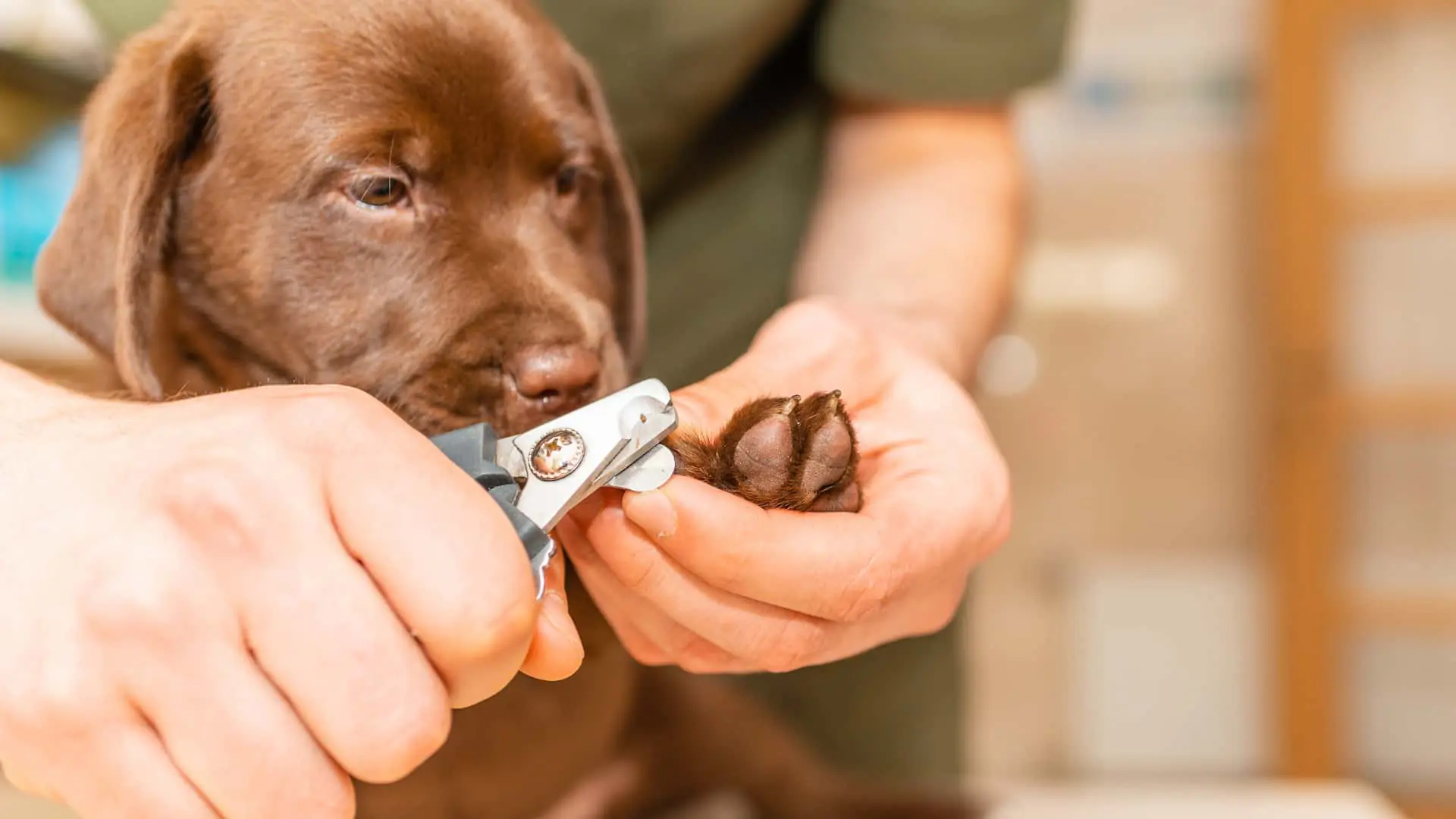
If your dog is already fearful, do not attempt to trim all twenty nails in a single session. Start by aiming for just one nail a day, pairing every movement with high-value rewards like freeze-dried liver or squeeze-cheese.
Step 1: The Setup and Positioning
Find a quiet, well-lit room in your home. If you have a small dog, placing them securely on a countertop or table lined with a non-slip yoga mat can save your back. For large dogs, have them lie comfortably on their side on a supportive bed.
Step 2: Isolating the Toe
Hold your dog’s paw firmly but gently in your non-dominant hand. Use your fingers to separate a single toe, pushing the surrounding fur away. Gently press your thumb on the top of the toe joint while pulling back slightly on the paw pad—this naturally extends the nail forward, giving you maximum visibility.
Step 3: Making the Cut
Hold the clippers at a slight 45-degree angle, following the natural downward curve of the nail. Clip the tip with a swift, confident squeeze of the handle. Slicing too slowly squeezes the nail wall, which can cause discomfort even if you are nowhere near the quick.
Step 4: Don’t Forget the Dewclaws
Always remember to check for the dewclaws, which sit higher up on the inside of the front (and sometimes back) wrists. Because these nails never touch the ground, they don’t get worn down by walking and can easily grow in a complete circle, embedding directly back into the leg skin if ignored.
How to Build Positive Associations
If your dog pulls their paw away the moment you touch it, you need to hit the reset button on their training using a process called desensitization and counter-conditioning.
Spend a week simply touching the clippers to your dog’s leg, followed immediately by a jackpot treat, then putting the clippers away. Once they are excited to see the tool, progress to touching a single toe with the clippers without cutting. Gradually build up to the sound of the clip by snipping dry uncooked spaghetti noodles near their paw. By breaking the process down into tiny, winnable micro-steps, you teach your dog that paw handling is a safe, highly rewarding game.
How Walk! ATX Can Support Your Care Routine
At Walk! ATX, we understand that proper physical maintenance allows your dog to experience their outdoor adventures to the absolute fullest. A balanced lifestyle requires a blend of proper exercise, behavioral support, and wellness care.
- Desensitization Training: If your pup displays intense fear or reactivity during handling, our dog training programs can implement force-free cooperative care techniques to build their confidence.
- Premium Care Add-Ons: For dogs that need a professional hand, our expert pet grooming team is equipped to handle nail trims, grinds, and full spa care with maximum patience and a calm touch.
- Holistic Routine Care: Whether your dog is out for an intensive dog running session, enjoying a neighborhood daily walk, or staying with us for overnight boarding, our vetted team monitors your dog from nose to tail to ensure they are moving comfortably.
Ready to build a stress-free care routine for your pet?