Austin’s greenbelts, creeks, and shady neighborhood trails are some of the best places to walk a dog. They’re also home to copperheads, one of the venomous snakes found in Central Texas. Copperhead bites are rarely fatal for healthy dogs, but they are always a reason to get to the vet right away.
Here’s what Austin dog owners should know about where copperheads hide, what a bite looks like, and what to do if it happens.
Meet the Copperhead
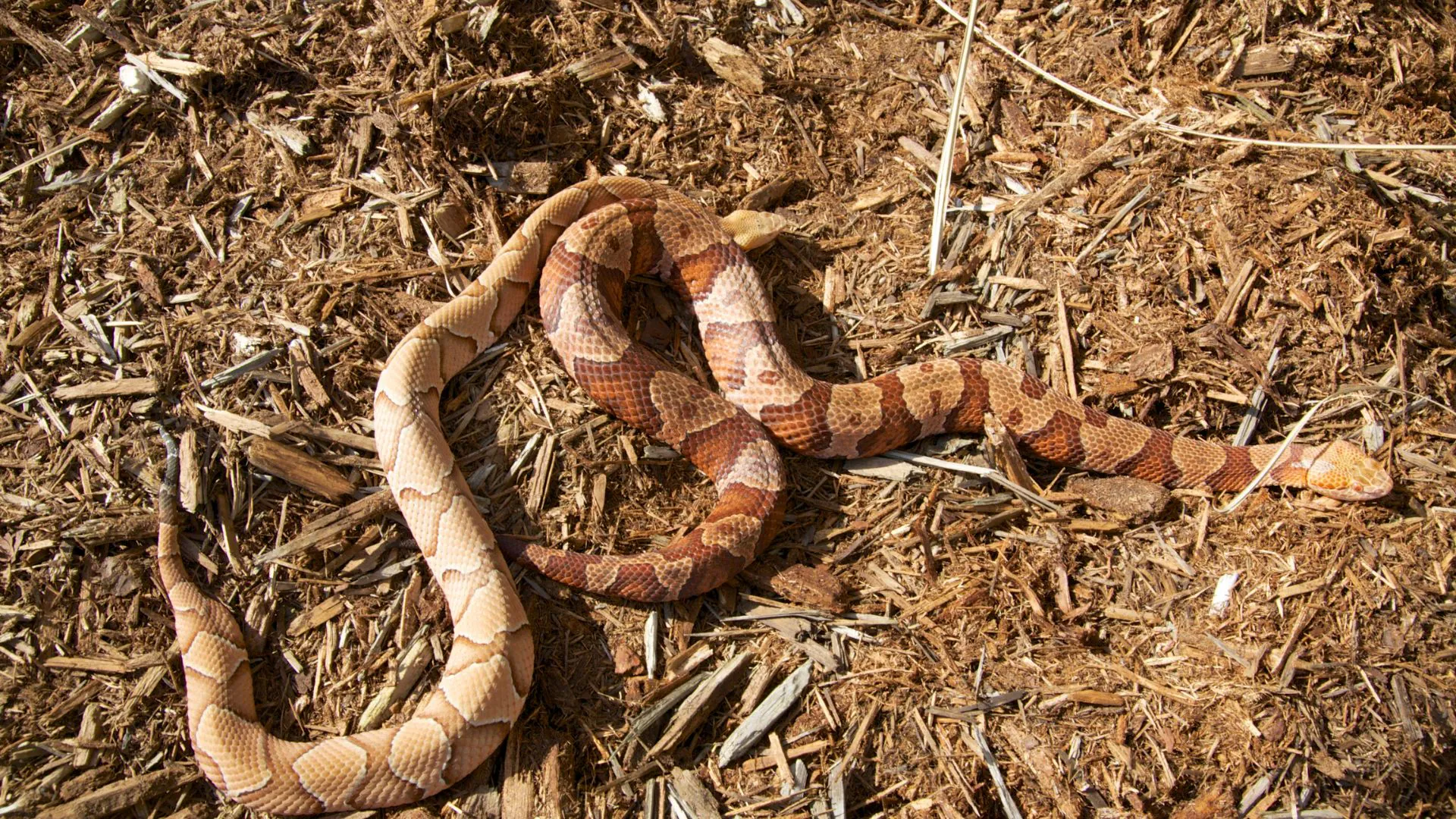
The copperhead found in Central and West Texas is the broad-banded copperhead. It has a tan or coppery body with darker, wide reddish-brown bands. That pattern is excellent camouflage in dry leaves, which is exactly why these snakes are easy to miss.
Copperheads tend to stay still and rely on camouflage instead of fleeing. That’s good news for people who watch where they step, but it’s a problem for curious dogs who push their noses into leaf piles and brush.
Where Copperheads Hide Around Austin
Copperheads like cover. On a typical Austin walk, take extra care around:
- Leaf litter and brush along trail edges
- Rocky creek beds and limestone ledges, like those along the greenbelts
- Woodpiles, fallen logs, and dense ground cover
- Tall grass and overgrown areas near water
- Landscaping beds, stone walls, and shady spots in neighborhood yards
They’re most active in the warmer months. During hot summer weather, many snakes become more active around dusk and at night, which matters if you walk your dog after dark to beat the heat. Our guide to walking your dog at night in Austin has tips for well-lit routes.
Signs Your Dog May Have Been Bitten
Bites often happen on the face, neck, or front legs, since that’s where a dog investigates first. You may not see the snake at all. Watch for:
- Sudden yelping, pawing at the face, or limping
- Rapid swelling, especially on the muzzle, face, or a leg
- One or two small puncture wounds, sometimes bleeding
- Obvious pain when the area is touched
- Drooling, vomiting, or lethargy
- Trembling, weakness, pale gums, changes in breathing, or collapse
Some signs show up quickly, while others develop over time. If your dog shows sudden pain and swelling after time outdoors, treat it as a possible snake bite even if you didn’t see a snake.
What to Do If a Copperhead Bites Your Dog

- Stay calm and move away from the snake. Don’t try to catch or kill it. If you can do so safely from a distance, a quick photo can help your vet identify it, but your dog comes first.
- Keep your dog as still and calm as possible. Carry a small dog if you can. Limit walking for larger dogs.
- Call your vet or the nearest 24-hour emergency animal hospital on the way. Let them know you’re coming in with a possible snake bite so they can prepare. Not every clinic stocks antivenom, so calling ahead can save time.
- Note the time of the bite. Your vet will want to know.
- Remove your dog’s collar if the bite is near the neck or face, since swelling can make it tight.
What not to do
- Don’t cut the wound or try to suck out the venom.
- Don’t apply a tourniquet or ice.
- Don’t give any medication unless your veterinarian tells you to.
- Don’t wait to see if it gets better. Even a bite that looks minor should be checked by a vet.
How to Lower the Risk on Austin Trails
- Keep your dog leashed in snake-prone areas. A leash keeps your dog on the trail and out of brush and rock crevices. In Austin, dogs are required to be leashed outside designated off-leash areas. See our guide to Austin dog leash laws.
- Stay on clear, open paths. Avoid letting your dog dig into leaf piles, woodpiles, or rocky ledges.
- Bring a flashlight after dark. Light up the path ahead, especially in warm weather.
- Teach a strong “leave it.” A reliable cue can stop your dog from investigating something dangerous. If you need help building that skill, our dog training programs cover leash manners and basic obedience.
- Tidy up your yard. Clearing brush, woodpiles, and debris gives snakes fewer places to hide close to home.
- Save emergency numbers in your phone. Know where your nearest 24-hour emergency vet is before you hit the trail.
Planning a trail day? Our guides to greenbelt hikes for dogs and dog-friendly hikes in Austin can help you pick a route.
Frequently Asked Questions
Can a dog survive a copperhead bite?
Yes. Healthy dogs usually recover from copperhead bites with prompt veterinary care. But every bite is different, and small dogs, puppies, seniors, and dogs bitten in the face or neck can be at higher risk. Always treat a bite as an emergency.
How long after a snake bite will a dog show symptoms?
Pain and swelling often appear quickly, but other signs can develop over the following hours. Don’t wait for symptoms to get worse before calling your vet.
Are copperheads the only venomous snakes near Austin?
No. Central Texas is also home to other venomous snakes, including the western diamondback rattlesnake. Because it’s hard to know which snake bit your dog, the advice is the same: get to a vet right away.
Safe Adventures With Walk! ATX
Safety comes first on every Walk! ATX walk and greenbelt hike. Our team is certified in pet first aid and CPR, and Walk! ATX clients can reach us 24/7 by phone or text. Ready to get your pup out on a safe, tiring adventure? Learn about our Austin dog walking services.