

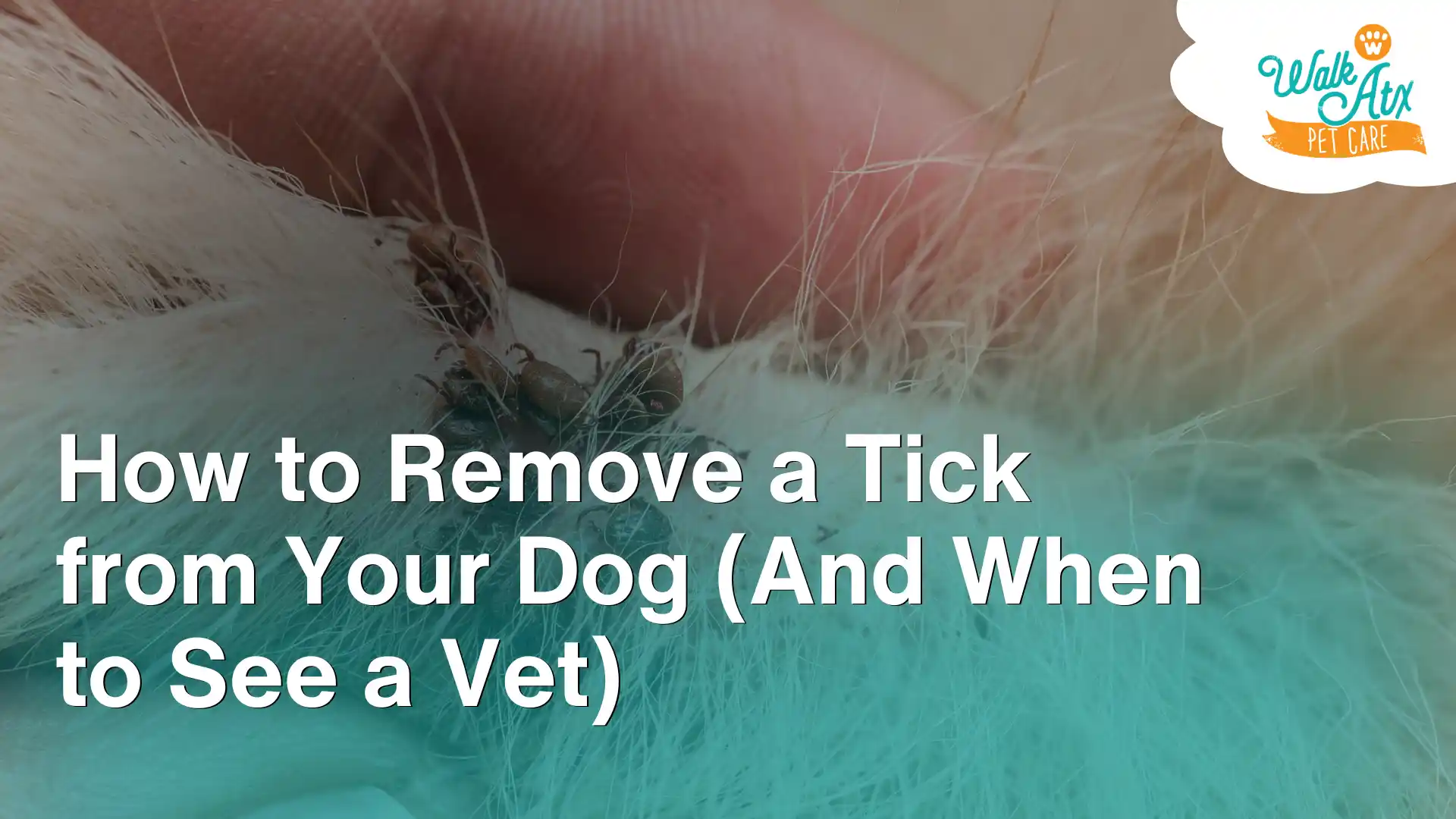
Austin is an incredible place to be a dog owner, offering miles of off-leash parks and shaded trails. However, our city’s lush green spaces, like the Barton Creek Greenbelt and Emma Long Metropolitan Park, are also prime real estate for a less-welcome local resident: ticks. Learn how to remove a tick from a dog safely.
Finding a tick on a dog can instantly make any pet parent’s skin crawl. Ticks are more than just creepy parasites; they are active disease vectors capable of transmitting serious illnesses to your pup. Knowing exactly how to perform a safe tick-removal protocol for dogs, how to identify local species, and when to call a veterinarian is crucial for anyone raising a pet in Central Texas.
As Austin’s trusted experts in dog walking and dog training, Walk! ATX has put together this comprehensive, localized guide to keeping your pet tick-free.
When is Tick Season in Austin?
In many parts of the country, tick prevention is strictly a spring and summer concern. However, because of Austin’s mild climate, tick season in Texas is practically a year-round battle.
- Peak Season (April through October): This is when tick activity is at its absolute highest. The combination of spring humidity and warm summer temperatures causes local populations to surge.
- The Fall & Winter Reality: Do not let your guard down when the temperature dips. Local species like the Blacklegged tick actually become highly active during the fall mating season. Ticks will actively “quest” for a blood meal on any warm winter day where temperatures sit above 45°F.
Common Tick Species in Greater Austin
When checking your dog, you are most likely to encounter one of these three local varieties:
- The Lone Star Tick (Amblyomma americanum): Highly iconic and aggressive, easily identified by the single iridescent white spot on the back of the adult female.
- The Blacklegged Tick / Deer Tick (Ixodes scapularis): Commonly found in wooded, brushy areas and semi-suburban Austin neighborhoods, this is the primary carrier of Lyme disease.
- The Brown Dog Tick (Rhipicephalus sanguineus): Unique because it can survive and breed entirely indoors, making residential infestations a risk if left unchecked.
How to Check Your Dog for Ticks
Ticks do not fly or jump; instead, they climb to the tips of tall grasses or brush and wait for a host to brush past them. Because they traverse the length of your dog’s body looking for thin skin to feed on, you should perform a comprehensive inspection after every single outdoor excursion.
Slowly run your hands through your dog’s fur, applying gentle pressure to feel for small, unusual bumps. Pay extra attention to these top 7 tick hiding places:
- Inside and Behind the Ears: Ticks love the dark, warm folds of the ear canal.
- Between the Toes: Always inspect the webbing of the paws after a walk through tall grass.
- Under the Collar and Harness: The friction creates a perfect hidden pocket for pests.
- The Groin and Armpits: Areas with less hair and high blood flow are prime targets.
- Around the Eyelids: Ticks frequently attach near the eyes, where they can easily be mistaken for skin tags.
- The Base of the Tail: Run your fingers thoroughly against the skin at the rear of your dog.
Step-by-Step Guide for Safe Tick Removal on a Dog
If you spot a parasite, do not panic. There is a general 24-to-48-hour grace period after a tick latches on before it can successfully transmit most disease-causing pathogens, making prompt removal your best defense.
What NOT to Do
Never try to smother a tick with petroleum jelly, burn it with a match, or paint it with nail polish. These methods can cause the tick to regurgitate its stomach contents back into your dog’s bloodstream, drastically increasing the risk of infection.
The Proper Removal Protocol:
- Prepare Your Tools: Grab a pair of fine-tipped tweezers or a specialized tick-removal tool (like a Tick Twister), rubbing alcohol, and a pair of gloves.
- Part the Fur: Ensure you have a clear, unobstructed view of the tick’s body where it meets your dog’s skin.
- Grasp and Pull: Use the fine-tipped tweezers to grasp the tick as close to your dog’s skin as possible (around its mouthparts). Pull straight upward with steady, even pressure. Do not twist or jerk the tick, as this can cause the mouthparts to break off and remain embedded in the skin.
- Clean the Wound: Once removed, thoroughly clean the bite site with rubbing alcohol, an antiseptic wipe, or soap and water. Wash your hands carefully.
- Dispose or Save: Place the tick in a sealed plastic bag or a small jar filled with rubbing alcohol to kill it. Pro Tip: Save the tick for a few weeks. If your dog gets sick, your vet can use the specimen to identify exactly what pathogens your dog might have been exposed to.
What if the head breaks off? If the tick’s mouthparts remain in the skin, don’t dig around aggressively, as this can cause a secondary skin infection. Clean the area and monitor it; your dog’s body will usually expel the fragments naturally over time, much like a splinter.
When to See a Vet for a Tick Bite
While a standard tick bite will usually leave a small, localized red bump similar to a mosquito bite, you should monitor your pet closely for the next two to three weeks.
Contact your veterinarian immediately if you notice:
- The Bite Area Becomes Infected: Excessive swelling, oozing pus, or severe redness that expands over time.
- Lethargy and Weakness: If your high-energy dog suddenly seems depressed or refuses to go on their daily walk.
- Unexplained Lameness: Tick-borne illnesses frequently cause sudden, shifting joint pain or stiffness, making it look like your dog has hurt their leg.
- Loss of Appetite: Refusing meals or a sudden drop in weight.
- Fever: A distinct spike in body temperature, often accompanied by shivering.
Your vet can run a quick blood panel to test for common Texas tick-borne infections like Ehrlichiosis, Anaplasmosis, and Lyme disease, all of which are highly treatable with antibiotics if caught early.
Prevention: The Ultimate Shield
The single best way to manage ticks on a dog is to stop them from latching on in the first place. Speak with your veterinarian to establish a robust preventative routine:
- Veterinary-Grade Preventatives: Oral chews (like NexGard or Simparica) or topical treatments are incredibly effective at killing ticks within hours of contact, long before they can transmit disease.
- Yard Maintenance: Ticks hate short grass. Keep your lawn well-trimmed and remove piles of dead leaves to minimize their breeding grounds.
- Professional Care: If you are a busy professional utilizing dog walking services, ensure your walking team knows your dog’s preventative schedule.
How Walk! ATX Protects Your Pup
At Walk! ATX, your dog’s safety and well-being are at the core of everything we do. We understand the unique environmental challenges of the Central Texas landscape and treat every outing with professional care.
- Post-Walk Inspections: Our professional dog walkers are trained to look for pests and can easily include a quick “tick check” after navigating local paths.
- Smart Route Planning: During peak season, we can avoid heavily overgrown trail margins to reduce exposure.
- Health and Behavioral Monitoring: Our daily update reports flag any sudden drops in energy, limping, or behavioral shifts that could indicate your pup is feeling under the weather.
- Supportive Services: From specialized pet grooming options to soothing pet sitting, our fully vetted team provides a holistic approach to your dog’s care.
Want to keep your pup happy, healthy, and ready for adventure?