




Why Advanced Dog Training Transforms Your Dog’s Behavior
You’ve mastered the basics. Your dog sits on command, stays when asked, and comes when called—most of the time. But you’re noticing a plateau. Your pup still pulls on the leash during walks, reacts to other dogs at the park, or struggles with impulse control when guests arrive. This is where advanced dog training techniques makes all the difference.
Advanced dog training goes far beyond basic obedience commands. It’s about building deeper communication with your dog, addressing behavioral challenges at their root, and creating a well-adjusted companion who thrives in real-world situations. Whether you’re dealing with reactivity, preparing your dog for off-leash freedom, or working toward specialized goals like therapy dog certification, advanced training techniques provide the framework for lasting behavioral change. At Walk! ATX, our certified trainers understand these advanced methodologies and can guide you through the process.
Core Advanced Training Techniques
Clicker Training for Precision Communication
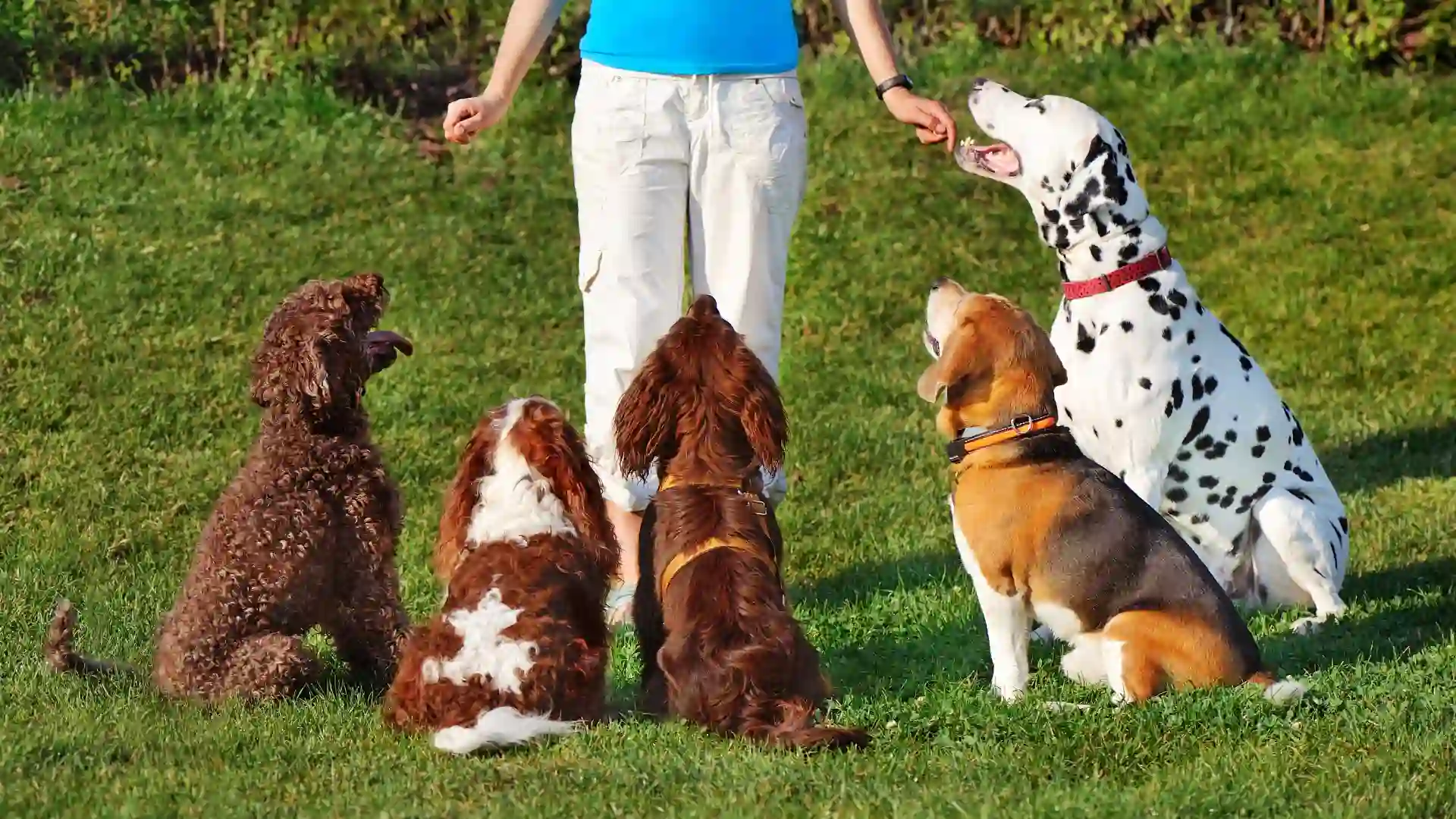
Clicker training uses a small handheld device that makes a distinct “click” sound to mark the exact moment your dog performs the desired behavior, followed immediately by a reward.
This precision accelerates learning dramatically because your dog understands exactly which behavior earned the reward. The technique, popularized by Karen Pryor, is based on operant conditioning principles and has become one of the most effective training methods available.
How to implement:
- Charge the clicker: Click and immediately give a treat 10-15 times
- Capture behaviors: Click and reward behaviors your dog naturally performs
- Add a cue: Once your dog consistently performs a behavior, add a verbal or hand signal
- Increase difficulty: Gradually add distractions or combine behaviors
- Fade the clicker: Reduce reliance on the clicker as the behavior becomes reliable
Clicker training excels at teaching complex behaviors, multi-step sequences, and building off-leash reliability. This technique is particularly effective for dogs that struggle with impulse control or need behavioral modification.
Behavioral Shaping and Desensitization
Behavioral shaping breaks complex behaviors into small, manageable steps and rewards progress toward the final goal. Desensitization gradually exposes your dog to a trigger at low intensity, starting below their reaction threshold. This approach is essential for addressing reactivity issues that prevent dogs from enjoying social situations.
For example, if your dog reacts to other dogs at 50 feet away, start training at 100 feet where your dog notices other dogs but doesn’t react. Pair the trigger with positive experiences (treats, play, praise), then gradually decrease distance over weeks or months. This systematic approach requires patience but produces lasting results.
Timeline expectations:
- Mild anxiety or reactivity: 4-8 weeks
- Moderate behavioral issues: 8-16 weeks
- Severe behavioral problems: 16+ weeks or professional board-and-train programs
Impulse Control and Emotional Regulation
Advanced impulse control teaches your dog to manage excitement, resist temptation, and regulate emotional responses. This is foundational for off-leash reliability and real-world behavior. Dogs with strong impulse control are safer around children, other pets, and in unpredictable environments.
Key exercises:
- Wait at doorways before exiting
- Leave it: Ignore food, toys, or other temptations
- Sit for greetings: Sit calmly when guests arrive instead of jumping
- Settle: Lie down and remain calm for extended periods
Strong impulse control enables safe off-leash play, calm behavior during vet visits, and reliable behavior around children and other pets. These skills are particularly valuable for dogs that will be walking in busy Austin environments. Many dog owners find that professional dog walking services complement training by providing daily practice opportunities in real-world settings.
Implementation Strategy: A Step-by-Step Approach
Phase 1: Assessment and Planning (Weeks 1-2)
Honestly assess where your dog currently stands:
- Which basic commands does your dog know reliably?
- In which environments are commands reliable?
- What specific behaviors or situations are problematic?
- What motivates your dog most (food, toys, play, praise)?
Set SMART goals:
- Specific: “My dog will sit calmly when guests arrive” (not “better manners”)
- Measurable: “For 30 seconds without jumping”
- Achievable: “In my home”
- Relevant: “Because jumping on guests is a problem”
- Time-bound: “Within 8 weeks”
Prioritize 2-3 goals maximum. Create a training schedule: 5-6 sessions per week, 10-15 minutes per session. If you need guidance setting realistic goals, Walk! ATX’s team can help you develop a personalized plan during a consultation.
Phase 2: Technique Introduction (Weeks 3-6)
Introduce one technique at a time. Each training session should:
- Start with a warm-up (review previously learned behaviors)
- Introduce or practice the new technique
- End on a positive note (a behavior your dog knows well)
- Last 10-15 minutes maximum
Keep a training log documenting:
- date
- technique practiced
- your dog’s response
- any adjustments made
Review weekly. If your dog isn’t progressing after 2-3 weeks, adjust your approach or consult a professional trainer. Many dog owners find that professional training guidance accelerates progress significantly. Walk! ATX offers private lessons and group classes designed to fit your schedule and training goals.
Phase 3: Real-World Application (Weeks 7-12)
Your dog understands the technique in a controlled environment. Now, prove it in real-world situations by gradually increasing environmental distractions:
- Practice in your home with minimal distractions
- Practice in your backyard
- Practice in a quiet park or empty parking lot
- Practice in a moderately busy environment
- Practice in a highly distracting environment
Each step should take 1-2 weeks. Your dog’s brain is location-specific, so practice in different rooms, parks, and environments to build generalization and reliability. Austin offers excellent opportunities for real-world training practice. Consider combining dog training with dog training with regular dog walking to reinforce learned behaviors in natural settings.
Phase 4: Maintenance and Advanced Goals (Ongoing)
Prevent regression through weekly practice of learned behaviors (2-3 sessions per week), real-world reinforcement in daily life, and continued mental and physical exercise. Once your dog masters foundational advanced training, consider specialized goals like agility training, scent work, or therapy dog preparation. Walk! ATX’s comprehensive services include ongoing support for maintaining your dog’s training progress and exploring advanced goals.
Common Implementation Mistakes to Avoid
 Moving too quickly through phases: The most common mistake is rushing. Your dog’s brain needs time to consolidate learning. If your dog isn’t responding reliably in the current environment, don’t progress to a more challenging one.
Inconsistency in training methods: When you use different cues for the same behavior or reward sometimes but not always, your dog receives mixed signals and learning slows dramatically. Ensure all family members follow the same approach. This is why professional trainers often work with entire households to ensure consistency.
Ignoring your dog’s individual needs: Every dog is unique. Adjust training based on breed, age, temperament, and personality. Some dogs are naturally anxious and need confidence building. Stubborn dogs respond better to high-value rewards. Sensitive dogs need gentler corrections.
Neglecting mental and physical exercise: A well-exercised dog is more motivated to train and learns better. Provide 30-60 minutes of physical exercise daily, plus mental enrichment through puzzle toys, scent work, and training. dog walking is an excellent way to meet these exercise requirements while reinforcing training in real-world contexts.
Positive Reinforcement vs. Punishment-Based Methods
The science is clear: positive reinforcement training produces better results than punishment-based methods. Research consistently shows that positive reinforcement:
- Produces faster learning
- Creates more reliable behaviors
- Reduces stress and anxiety
- Strengthens the human-dog bond
- Doesn’t create fear-based side effects
The American Veterinary Society of Animal Behavior (AVSAB) strongly endorses positive reinforcement training, noting that dogs trained with aversive methods are significantly more likely to exhibit stress-related behaviors. Punishment-based methods (yelling, physical corrections, aversive tools) may suppress behavior temporarily, but they create fear and anxiety, damage trust, and often increase aggression or reactivity.
Research demonstrates that dogs trained with positive reinforcement show better learning outcomes and fewer behavioral problems compared to those trained with aversive methods. This scientific consensus supports the force-free, reward-based approach that Walk! ATX uses with every client.
When to Work with a Professional Trainer
Consider professional help for:
- Complex behavioral issues (aggression, severe reactivity)
- Anxiety disorders
- Behavioral problems affecting quality of life
- Issues that haven’t responded to independent training
- Accelerated learning through board-and-train programs
Look for trainers with:
- Relevant certifications from recognized organizations like IAABC (International Association of Animal Behavior Consultants) or CCPDT (Certification Council for Professional Dog Trainers)
- Positive reinforcement-based philosophy
- Client references and testimonials
- Transparent pricing and realistic guarantees
Walk! ATX’s certified trainers meet all these criteria and have helped countless Austin dog owners achieve their training goals. Our team holds certifications from recognized credentialing bodies and maintains a commitment to science-based, humane training methods.
Conclusion: Your Path to Success
Advanced dog training is a journey that requires patience, consistency, and a commitment to understanding your dog’s unique needs. The rewards—a well-behaved, confident, happy dog—are absolutely worth the effort.
Remember three core principles:
Consistency is everything. Your dog learns through repetition and predictability. Inconsistent training produces inconsistent results.
Patience pays off. Advanced training takes time. Trust the process, celebrate small wins, and don’t rush through phases.
Positive reinforcement works. Science supports reward-based training. Build trust with your dog, and they’ll move mountains for you.
Whether you’re working independently or partnering with a professional dog trainer, advanced dog training is achievable. Your dog has the capacity to learn, and you have the ability to teach.
Ready to Get Started?
If you’d like personalized guidance tailored to your dog’s specific needs, Walk! ATX is here to help. Our certified trainers specialize in behavioral modification. We offer private lessons, group classes, and board-and-train programs designed to accelerate your progress and address your dog’s unique challenges.
Schedule a consultation with Walk! ATX today to discuss your training goals and discover how we can help your dog reach their full potential.